

Palm Tree Removal in Phoenix, AZ
Palm tree removal is the complete takedown of a palm, including the trunk, the stump or root ball, and the haul-off of all debris. It is not the same job as removing a shade tree. Palms have no branch structure to rig from and no taper to work with, the trunks are much heavier than their diameter suggests, and palm fiber cannot be run through a standard wood chipper. That is why palm removal is handled as its own service, with its own equipment and its own crew planning.
Goodman's Landscape has worked in valley landscapes since 1984. Palm removals are performed by our own crews using our own equipment — nothing about the job is subcontracted. The fleet is owned outright, dispatched by GPS from the office, and overseen by supervisors who manage every crew in the field, so the people who assess the job are the people who do it.
Why homeowners in Phoenix are removing palms
Palms were planted across the valley for decades, and many of those plantings have reached the point where they cost more than they give back.
- The maintenance never stops. A mature palm needs attention every year for the rest of its life. Frond removal, seed pod cleanup and skinning are recurring, not one-time.
- Height has outgrown access. A palm that was decorative at 15 feet becomes a specialty job at 50 or 60 feet, especially above a roofline or near a service line.
- Pests have moved in. An untrimmed frond skirt is known nesting habitat for roof rats, pigeons and scorpions. The dead skirt is the attraction, and removal ends it permanently.
- Water use no longer makes sense. A mature non-native palm is a heavy drinker in a climate where water is a live issue, and it returns very little shade for it.
- Shade was never the point. A palm casts a narrow column of shade that moves through the day. Homeowners who want the yard usable are trading palms for canopy trees.
- Storm risk. Monsoon wind load on a tall, top-heavy palm near a structure is a legitimate concern, and an unmaintained palm carries more sail.
How a palm tree removal is actually done
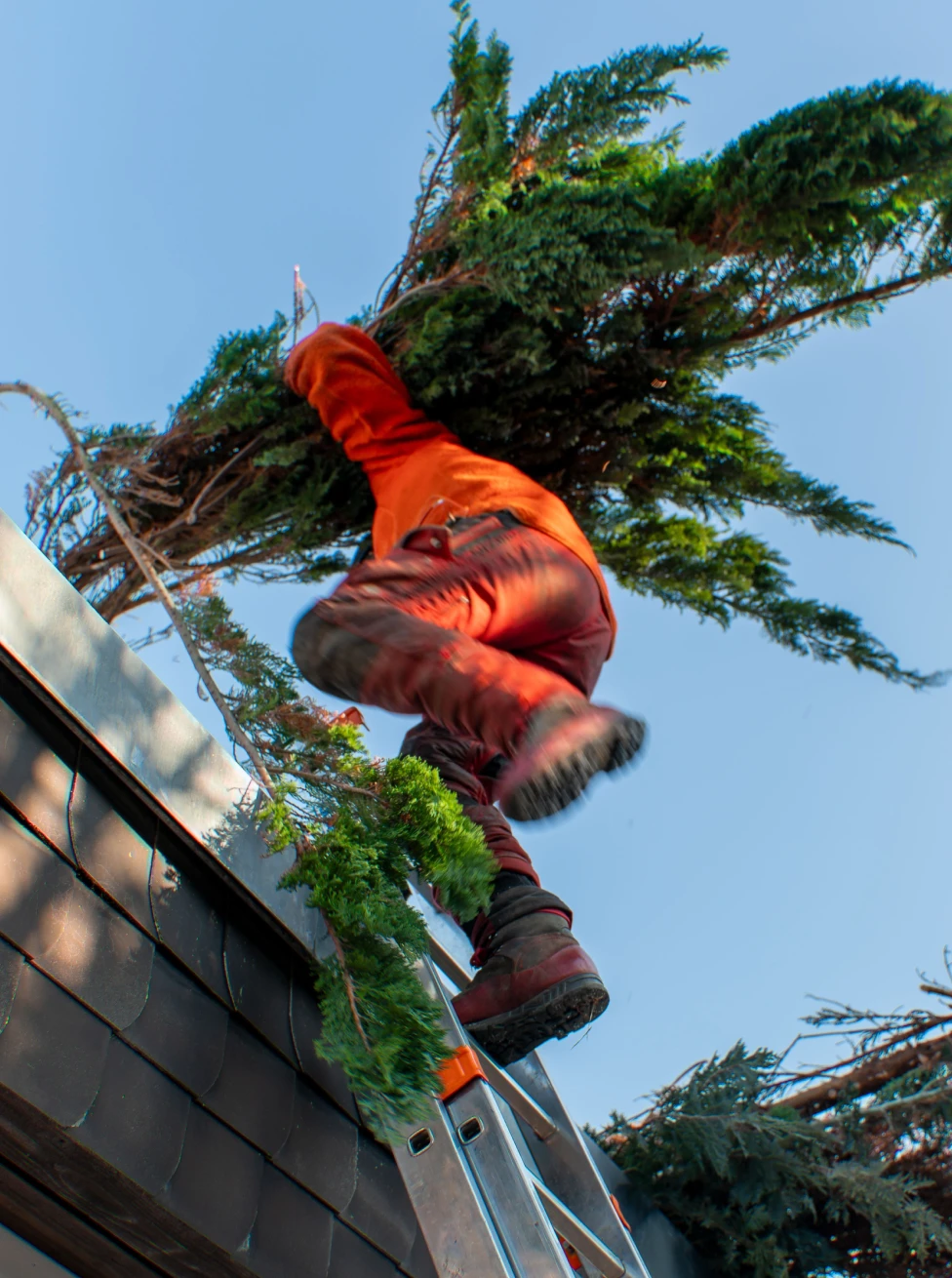
Site assessment first. Before anything is cut, the crew works out where trunk sections can safely land and how they will leave the property. Valley yards are usually constrained — pool decking, block walls, tile roofs, AC units, service lines and neighbor fences all limit the drop zone. This assessment determines the entire method.
Sectional takedown, top down. Palms are almost never felled in one piece on a residential lot. The crown comes off first, then the trunk comes down in sections, each lowered under control rather than dropped. On tight sites, or where a palm stands over a structure, sections are rigged and craned out rather than dropped at all.
Stump and root ball. The stump is ground flush or excavated depending on what is going in its place. A palm root mass is dense and spreads wide but shallow, which matters if new planting, irrigation or hardscape is going into the same spot.
Debris removal. All material leaves the property. Palm fiber does not chip like hardwood, so crown material and trunk sections are hauled rather than processed on site, and those sections are heavy. This is a real part of the job, not an afterthought.
Site restoration. Gravel raked back, irrigation checked where lines run near the removal, and the area left ready for whatever comes next.
What determines the scope of a palm removal
Every palm is assessed on the conditions of the specific site. The factors that actually move the work:
- Height and trunk diameter. The biggest driver. A 20-foot palm and a 60-foot palm are different operations, not the same operation scaled up.
- Species. Mexican fan palms grow tall and slender. Date palms are massive and heavy, with a far larger root mass and much greater debris volume.
- Access. Whether equipment can reach the palm decides the method. A palm in an open front yard and the same palm in a walled back yard behind a pool are different jobs entirely.
- Proximity to structures and utilities. Palms over roofs, beside pools, against block walls or near overhead lines require rigging and controlled lowering rather than straightforward felling.
- Stump treatment. Grinding flush, full root-ball excavation, or leaving the stump are different amounts of work.
- Debris volume and haul-off. Trunk sections are dense and heavy; date palms in particular generate substantial material.
- Whether anything is going back in. Replanting or hardscaping the spot changes how the root mass has to be handled.
Should you remove a palm tree yourself?
For anything above single-story height, no. The specific hazards are not the ones most people expect:
- Palm trunks have no branch structure to tie into, so there is nothing to rig from without purpose-built equipment.
- The trunk is much heavier than it looks. A section that lands wrong goes through tile roofs, pool decking, block walls and irrigation manifolds.
- Dead frond skirts are habitat. Cutting into one at height, unprepared, is how people meet roof rats, pigeons, scorpions and Africanized bees at the top of a ladder.
- Working near overhead service lines with wet, conductive plant material is a serious hazard.
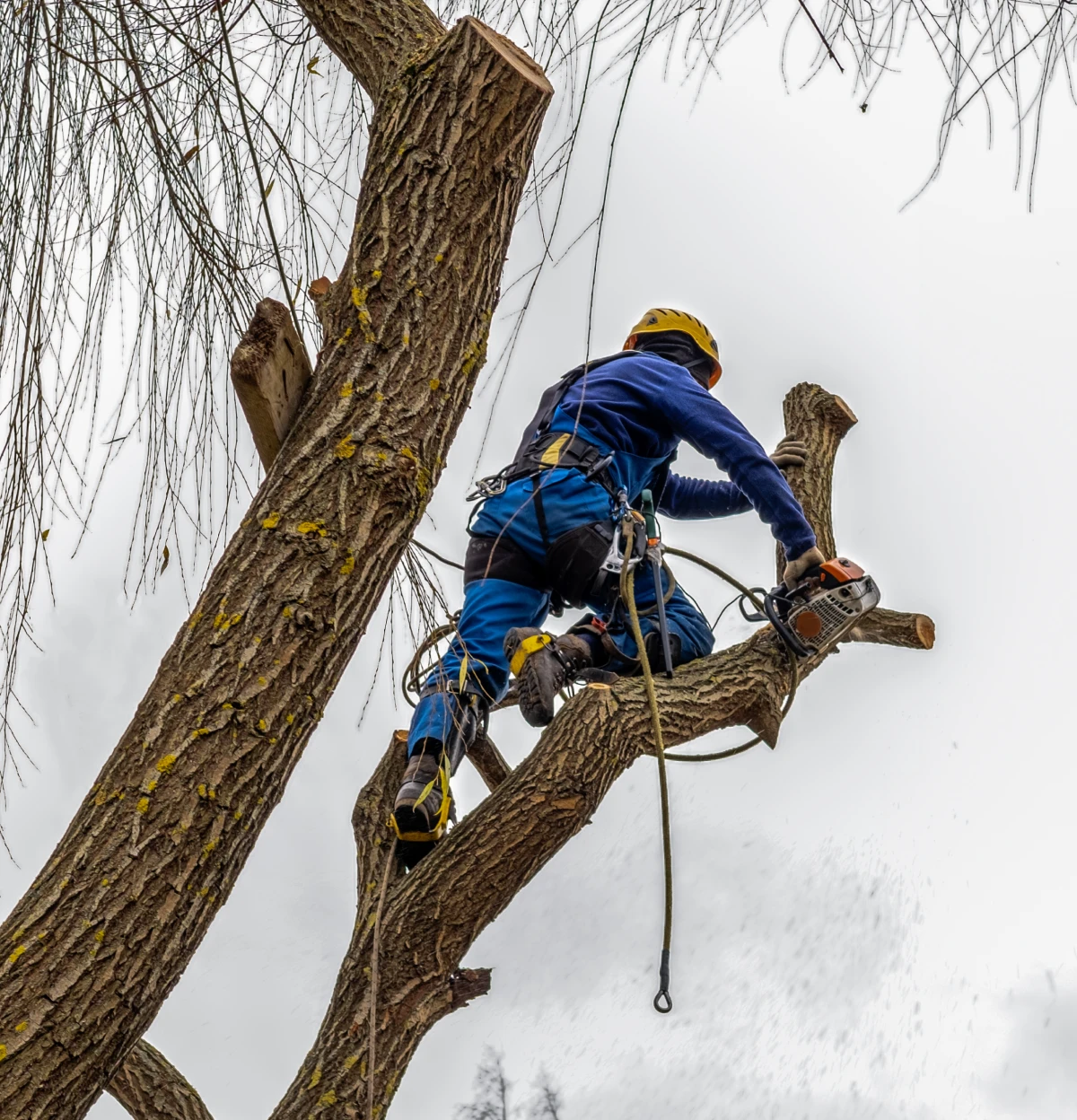
- Ladders do not belong on palm removals. This work is done from lift equipment or by a climber who is roped in properly.
- Fronds and low seed pods on a short palm are homeowner work. Taking a mature palm out is not.
What goes in its place
Removing a palm opens planting space and frees up water. Common directions:
- A desert-adapted shade tree — real canopy shade for a fraction of the water a mature palm drinks.
- Desert planting or hardscape — plantings, boulders or hardscape where a tree is no longer wanted.
- Nothing at all — grind the stump, blend the area into the existing gravel, reclaim the space.
Because Goodman's runs both a maintenance division and a design and installation division, the replacement planting or hardscape is handled in the same conversation rather than handed to someone else.
Frequently asked questions
Removing a palm on private residential property in Phoenix generally does not require a city permit. HOA rules are the more common constraint — some communities specify which trees may be removed and what must replace them. Requirements also vary across valley cities, so the rule for a specific address should be confirmed before work is scheduled.
Palms can be removed year-round in the valley. Practically, removing ahead of monsoon season takes the storm risk off the table before the wind arrives, and cooler months are easier on crews for large jobs. Species does not restrict timing the way it can with some shade trees.
Most residential palm removals are completed in a single day. Very tall palms, multiple palms, or sites needing crane access and controlled lowering can run longer.
Ground flush, excavated, or left standing, depending on what is planned for the spot. If new planting, irrigation or hardscape is going in, the root mass usually has to come out rather than just be ground down.
All material is hauled off the property. Palm fiber is stringy and will not chip like hardwood, so crown material and trunk sections are removed rather than processed on site.
Yes — that is exactly the case for controlled sectional lowering rather than felling. Sections are rigged and brought down under control so nothing lands on the roof, the deck or the pool.
Sometimes. Mature palms can be relocated, and Goodman's installs mature landscaping with its own equipment. Whether a specific palm is a good candidate depends on species, health and access at both ends.
Yes, and it is usually the more sensible approach when several are coming out, since the crew and equipment are already on site.
Why Goodman's Landscape
- Working in valley landscapes since 1984.
- Our own fleet — 35 GPS-tracked vehicles, plus our own heavy equipment. Nothing is rented per job and nothing is subcontracted, which is what makes scheduling reliable and lets us take the tall and awkward removals.
- Office-coordinated, supervisor-led crews. Scheduling and dispatch run through the office, and supervisors manage the crews in the field — the removal is planned before the truck rolls.
- Our own trained crews. The people who assess the job are the people who do it.
- Two ALCA awards in 2020 — Excellence in Landscaping and Best Landscape Management.
- ALCA member and SLM certified in sustainable landscape management.
- Both divisions in-house — maintenance and design/installation, so what replaces the palm is handled by the same company.